What the Google Antitrust Trial Revealed About Search Ranking
In fall 2023, at a federal court in Washington, D.C., Google’s vice president of Search and a former engineer testified under oath about the inner workings of search ranking. Following the transcripts and rulings, we revisit scenes from the trial: Google’s public statements that blurred the click question, an internal slide reading "We do not understand documents," Navboost, which remembers 13 months of clicks, and Q*, a quality score assigned mostly at the site level.
At 1:32 p.m. on October 18, 2023, court was back in session at the U.S. District Court for the District of Columbia in Washington, D.C. The case was the U.S. Department of Justice’s lawsuit accusing Google of monopolizing the search market. In the witness box before Judge Amit Mehta sat Pandu Nayak, Google’s Vice President of Search. Having joined Google in November 2004 and led its search quality team for many years, he had introduced himself in his morning testimony as one of Google’s four vice presidents of Search.
He was a witness called by Google. While the plaintiffs were still presenting their case, he took the stand early because of scheduling, and in the morning he answered questions from Google’s lawyers, explaining the work of building search. The afternoon was different. This time, DOJ attorney Kenneth Dintzer began the cross-examination.
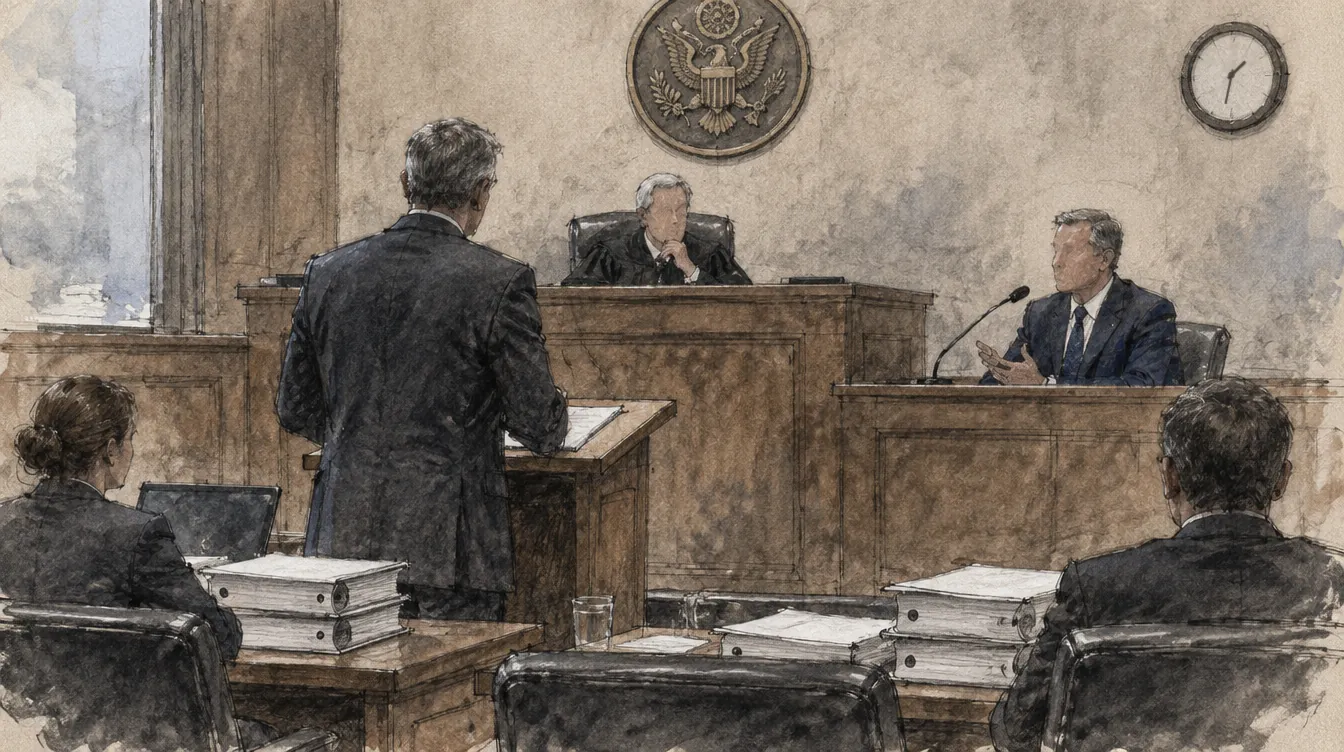
Surprisingly, the very first question featured Taylor Swift.
Dintzer: “Let me start with a broad question. How much user data does Google have right now? If I search for Taylor Swift, how long does any Google system keep that record?”
Nayak: “I’m not sure I can answer specifically, but if it’s anonymized and de-identified data, I think we might keep it indefinitely. I don’t know whether we delete it.”
Dintzer: “Forever?”
Nayak: “Well…”
Dintzer: “Forever is a long time.”
Nayak: “Forever is a long time, so I wouldn’t say that.”
Dintzer: “Indefinitely?”
Nayak: “I’m not the expert on how long we keep logs. We might delete them, but I don’t know.”
How long, and how much, does Google hold on to users’ traces? That question foreshadowed where the afternoon’s cross-examination was headed. Not long after, the answer to a question the SEO industry had long asked, and Google had long blurred, went on the court record.
What Google said in public
To grasp the weight of this scene, we need to turn the clock back about 15 years and hear what Google had been saying outside the courtroom. In 2008, Matt Cutts, then head of Google’s webspam team, left a comment on an article saying that, although he hadn’t read the piece, bounce rate would be not only easy to game for spam but also quite noisy.
At Pubcon, an SEO conference in Las Vegas in 2016, Gary Illyes said clicks are generally extremely noisy, because people do strange things on search results pages, clicking around all over the place. At the same event, though, he also said CTR (click-through rate) is used for personalization. In a 2019 Reddit AMA, he went a step further, flatly calling theories about dwell time and CTR generally made-up crap.
In November 2021, John Mueller said something similar. He wrote that if CTR determined rankings, search results would be covered in clickbait titles, and that this wasn’t what we see.
The reasons the three gave were not wrong in themselves. Clicks really are noisy, and ranking by click counts alone would let clickbait run wild. But those statements never clearly answered one question: does Google use clicks when it ranks results?
An internal slide that read “We do not understand documents”
Meanwhile, a different sentence was circulating inside Google. At the Google Search organization’s quarterly all-hands meeting on December 8, 2016, the ranking presentation was given by engineer Eric Lehman. His slide carried this heading: “We do not understand documents. We fake it.”

The speaker notes attached to the slide are even more blunt: “The ridiculous thing is that we don’t actually understand documents. Beyond some basic stuff, we hardly look at documents. We look at people. If a document gets a positive reaction, we figure it is good. If the reaction is negative, it is probably bad. Grossly simplified, this is the source of Google’s magic.”
Lehman earned a PhD in theoretical computer science from MIT, joined Google in 2005, and worked on search quality and ranking for more than 17 years.
Two years later, in November 2018, Lehman gave a presentation called ‘Ranking for Researchers’ to Google researchers who were becoming more involved in search. On a slide listing sensitive topics, he wrote: “Do not discuss the use of clicks in search, except on a need-to-know basis with people who understand not to talk about this topic externally. Google has a public position. It is debatable. But please don’t craft your own.”
Less than three months after that presentation, in February 2019, the “made-up crap” answer appeared on Reddit. The distance between what was said outside and what was said inside would begin to close in a courtroom five years later.
The former engineer called by the DOJ
Lehman left Google in November 2022. He said the work had become too demanding to balance with caring for his family. On September 20, 2023, a month before Nayak, when asked on the stand what he does now, he answered, “I’m a stay-at-home dad.” It was the DOJ, not Google, that called him as a witness.
When DOJ attorney Erin Murdock-Park asked what user interaction data is, Lehman explained: “The biggest problem in search is, given a query and a web page, is that page relevant to the query? A person can judge that easily. They can read the page and think about it. But a search engine runs on computers, and computers couldn’t read. So there’s a kind of trick to get around that. You show people web pages and watch how they react.”
His example was five search results. Which of them people click and which they skip becomes a hint about whether a page matches the query.
Just before the public examination ended, Murdock-Park brought up the 2018 slide. After reading his words aloud, she asked, “So Google has a public position on clicks?” Lehman’s answer began, “Well, I’ll just talk about it. I’m not sure whether there’s a trade secret issue or where the line is.”
Google’s lawyer stepped in, saying questions about trade secrets belonged in a closed session, but the judge said they should go as far as they could. When the DOJ asked whether Google’s public position on clicks was not entirely accurate, Google’s lawyer objected again. The judge settled it: “Let’s first hear what the public position is. It’s public, after all.” Lehman answered.
“I’m not a PR person, but I think the position we’ve aimed for is this: not to give a clear, definite message to people doing search engine optimization, or people trying to manipulate search results for their own benefit, that we use user data. Because they could use that to hurt Google and hurt search quality for everyone who uses Google. So we’ve said that we use user feedback data, meaning clicks, to evaluate search systems. And we’ve tried not to confirm that we use user data to rank search results. For example, I think we’d say things like there are many difficulties in using clicks for ranking. We don’t outright say we don’t use them, but we don’t lead people to believe we do, either.”
In other words, Google said only that it uses clicks for evaluation and avoided saying it uses them for ranking. He added: “The problem is that almost everyone knows Google uses clicks for ranking. We’re already under attack. So sometimes people say, ‘Wait, why are we trying to keep this secret? Everyone really knows.’ That’s why we say don’t craft your own position. That’s why it’s debatable, and that’s the debate people have: why are we trying to muddy an issue that isn’t ambiguous at all and that everyone knows about?”
The public examination stopped with that answer. The judge said they would resume at 3:35, and after the recess, the examination continued in a closed session.

Navboost, a giant ledger that remembers clicks
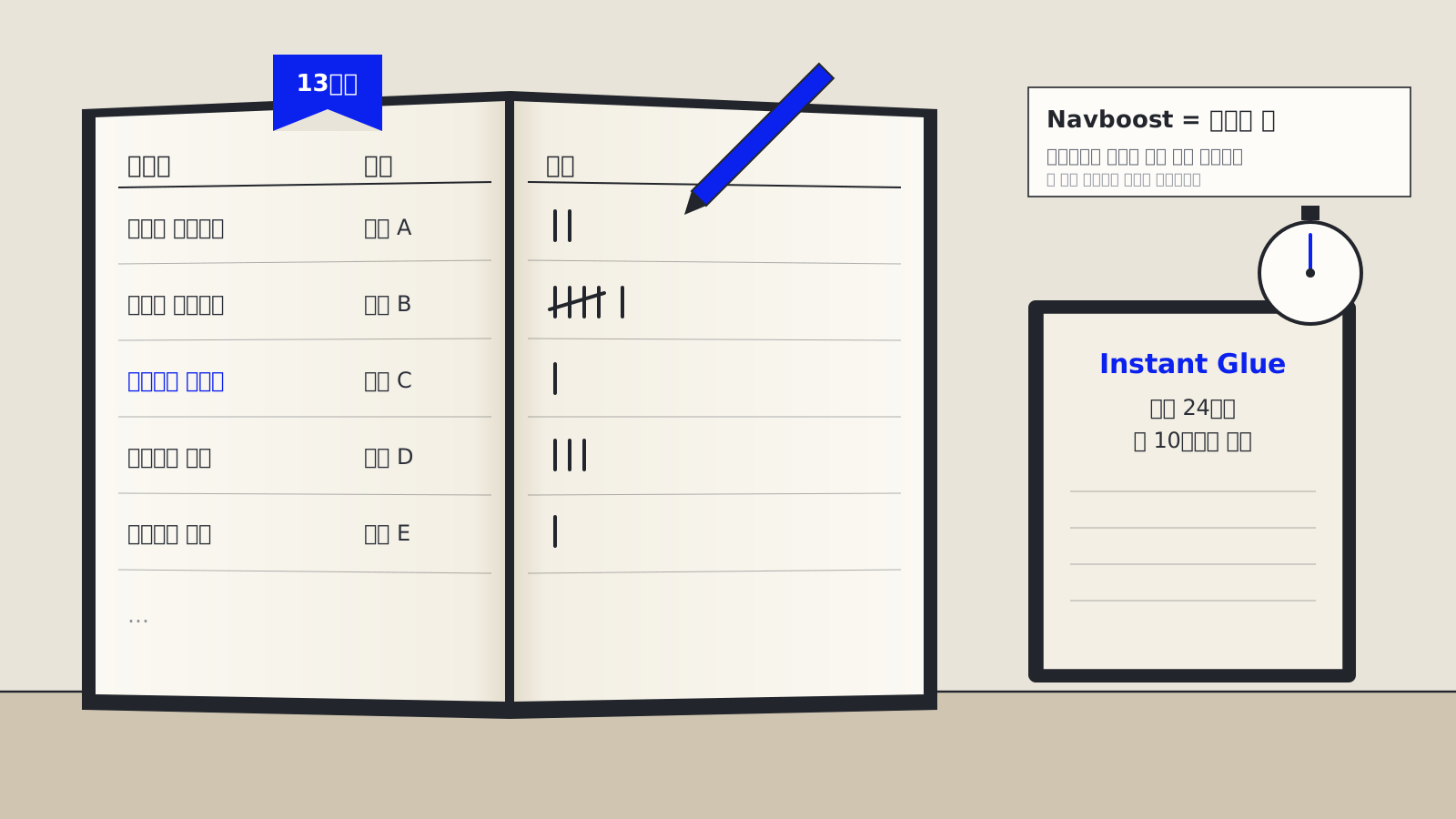
In the closed session, the DOJ produced an internal document Lehman had put together around 2017, the ‘Ranking Newsletter Overview,’ and read one line he had written: “Navboost was the first click-based system and is still the most powerful.” Asked whether that was right, Lehman answered, “Yes.”
Then, asked whether Navboost is trained on a certain period of user data (redacted in the public version), Lehman replied: “That’s my understanding. But the word ‘trained’ here is a bit misleading. Navboost is not a machine learning system. It’s just a big table. For this query, this document got two clicks; for this query, this document got three clicks, and so on. The values are aggregated and there’s a bit of extra data, but you can just think of it as a giant table.”
Because this exchange took place in closed session, it was left out of the public transcript at the time and only became known when a redacted transcript was released in May 2024.
On October 18, a month after Lehman’s testimony, Nayak also explained Glue in court. It is the system that handles the elements of the search results page other than web documents; in his words, “another name for Navboost that includes all of the other features on the page.”
Lehman didn’t hide the limits of clicks, either. In Google’s cross-examination, also held in closed session, he said there is a very strong tendency for people to click on lower-quality, less authoritative content than Google would like to show. If Google is pulled too far by clicks, the quality of search results falls below its goals. So having a ledger of clicks doesn’t mean the system simply rewards whatever gets the most clicks. That is also why Google measures quality separately, a story we’ll come back to.
There was more than one ledger. Late in the trial, the plaintiffs’ expert, Professor Douglas Oard, testified that there is a faster version of Glue. This system, called Instant Glue, uses click and query data to determine which of the freshest results match a query. Because it looks only at the last 24 hours of logs, it processes quickly and is updated roughly every 10 minutes. Alongside Navboost, the slow ledger that remembers 13 months, a fast ledger runs that tracks what just happened.
October 18, afternoon: what the vice president admitted and what he denied
Let’s return to the afternoon of October 18. Now it was time to confirm, from the mouth of a current vice president called by Google, what a former engineer called by the DOJ had revealed a month earlier. Dintzer went through Navboost point by point.
Dintzer: “The Navboost system remembers clicks that happened on past queries. Correct?”
Nayak: “Yes.”
Dintzer: “It’s trained on user data?”
Nayak: “Yes, it is.”
Dintzer: “Does it remember this information for every query that came in over the past 13 months?”
Nayak: “That’s correct.”
Dintzer: “And before 2017, it remembered every query that came in over 18 months?”
Nayak: “Yes.”
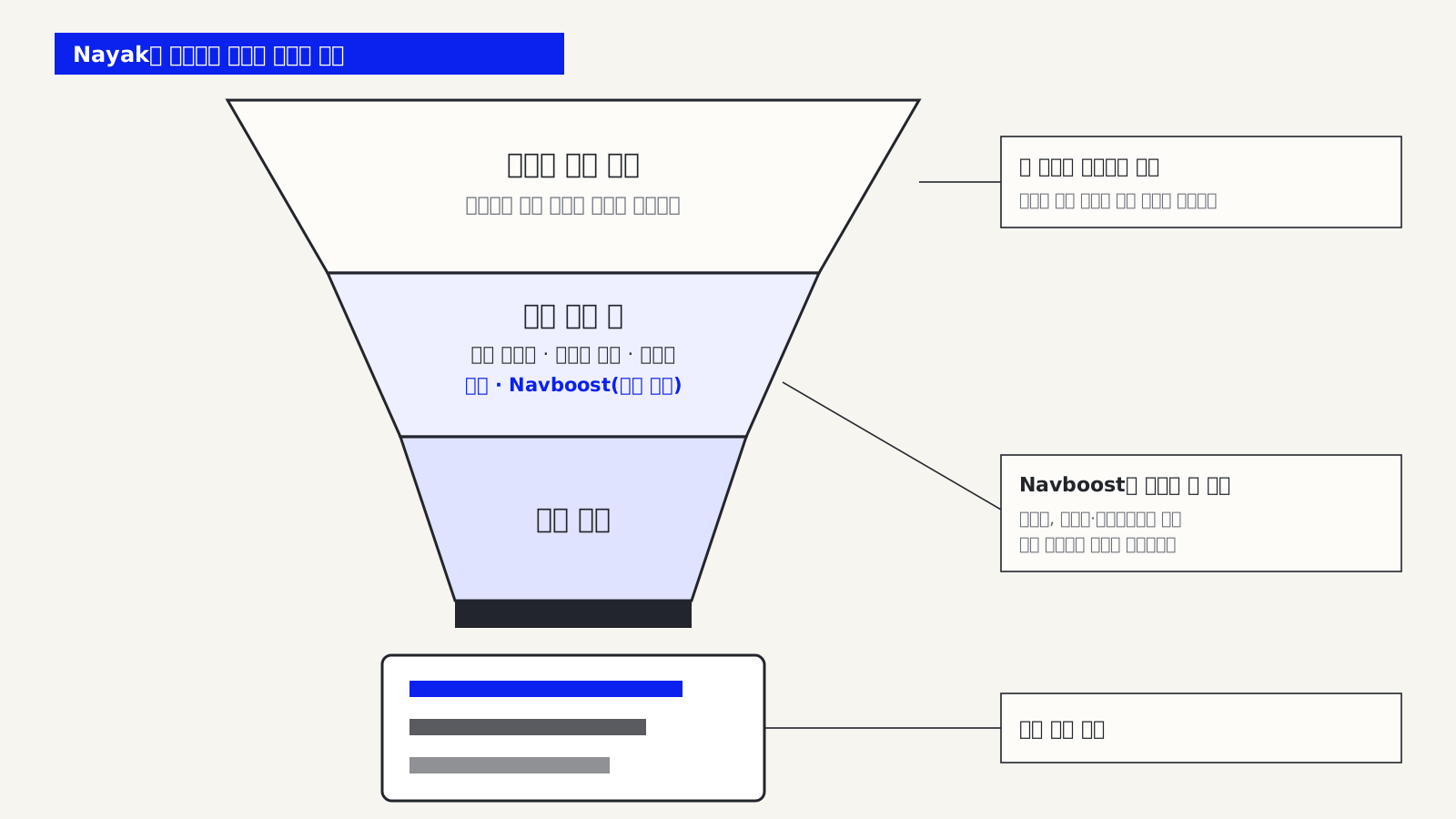
Dintzer then asked whether Navboost narrows a huge number of documents down to 200–300 candidates. Nayak said it wasn’t that simple. Many documents may have no clicks, so Navboost isn’t the only factor; all sorts of signals go in together, such as topicality signals, PageRank signals, and local signals. At another point he said, “Remember, Navboost only kicks in after documents have been retrieved.”
The ledger was also divided into columns. Asked whether Navboost stores location information separately, Nayak said yes, and said it also separates mobile and desktop. Asked whether there is a separate Navboost for mobile, he called it “one of the slices.” This means that even for the same query, records from different columns may be used depending on where it was searched and whether it was searched on a phone or a computer.
Much later, while Dintzer was asking about the training data for deep learning models such as RankBrain and DeepRank, the judge stepped in himself.
The Court: “When you say so many months of user data, what does that mean? Is it literally all the data Google collected over 13 months, or something else?”
Nayak: “It’s the searches and clicks that happened in that period.”
The Court: “From all users?”
Nayak: “All users. A U.S.-only model might be trained on a subset, like U.S. users, but a global model looks at all users.”
Two years later, the remedies ruling cites this exchange to explain what the 13 months of data used by Navboost is. The searches and clicks people around the world leave over 13 months fill the giant table Lehman described.
When Dintzer said he was changing topics and this might be a good place to break, the judge asked how much he had left. Told about an hour, which he would try to shorten, the judge said to see if he could cut it down during a 15-minute break. When court resumed at 3:16 p.m., the judge said, “Glad to see you applied Navboost to your examination.”
Recalling that Dintzer himself had earlier described Navboost as a mechanism that narrows countless documents down to 200–300 candidates, the judge’s remark reads like this: you took an hour’s worth of questions and, just as Navboost narrows down documents, picked only the essential ones.
On redirect, Google’s lawyer asked whether Navboost is Google’s only key algorithm. Nayak answered, “Absolutely not.” Asked how many signals there are, he said probably more than a hundred, and then walked through the order. When retrieving documents, the document itself, that is, the list of words in the index, is probably the most important thing, and it narrows the candidates down to tens of thousands. After that come many other factors, such as information retrieval algorithms that assess topicality, page quality, the reliability of results, and localization, and Navboost is among them. The judge asked again: in terms of importance, is Navboost in the top 10 percent, 25 percent, or half? Nayak said it was hard to rank, and summed up: “Navboost is important. I don’t want to downplay it at all. But there are many other important signals, like the ones I mentioned. And some of them you can’t even turn off. I don’t know what it would mean to turn off the document index. In some ways that’s the most important thing, things like the words on the page. So it’s a bit hard to judge it that way. I’d say Navboost is one of the important signals we have.”
The order he described is also the order of SEO. First, the words on your page have to get you into the pool of tens of thousands of candidates; then clicks move rankings at the next stage, together with other signals such as quality and location. A page that isn’t retrieved in the first place, after going through crawling and indexing, never even gets a chance to be clicked.
Nayak also talked about page quality that morning. Overall, he said, page quality tends to move slightly opposite to clicks. Raising page quality a little can actually make live user experiment results look worse. One reason he gave was that even if clickbait content is pushed down, people may still seek it out and click on it. Still, he added, page quality is a good thing in the long run. What score Google assigns to that quality, which sometimes moves against clicks, was revealed later in a released memo.
A month later: “Of course we use them”
In November 2023, as the trial was nearing its end, Danny Sullivan, Google’s public liaison for Search, posted on X to this effect: of course Google uses user interaction signals, and that is described on its ‘How Search Works’ page.
Google’s official page does indeed contain such sentences. It says Google uses aggregated and anonymized interaction data to assess whether search results are relevant to queries, and transforms that data into signals that help its machine-learning systems better estimate relevance. It is a sentence of quite a different tone from “made-up crap” on Reddit.
The source of the magic, copied into the monopoly ruling
The trial ran for nine weeks without a jury, from September 12 to November 16, 2023. After closing arguments in May 2024, the ruling came on August 5. Judge Amit Mehta wrote in his 286-page opinion: “After having carefully considered and weighed the witness testimony and evidence, the court reaches the following conclusion: Google is a monopolist, and it has acted as one to maintain its monopoly. It has violated Section 2 of the Sherman Act.”

The opinion explains that monopoly in numbers. In 2020, nearly 90% of U.S. searches went through Google, and close to 95% on mobile. In 2021 alone, Google paid more than $26 billion for default search engine placements.
Navboost also appears in the opinion. The judge wrote that Navboost is a signal that remembers user click data to match queries with documents. He also said the user data Google gets in 13 months is equivalent to what its rival Bing has gathered over more than 17 years. He wrote that new signals using large language models have not replaced Navboost, citing an internal Google document saying Navboost remains historically one of the strongest ranking factors.
The judge also copied into the opinion the sentence from the 2016 speaker notes we saw earlier: a positive reaction means a good document, a negative one probably a bad document, and, grossly simplified, this is the source of Google’s magic. He wrote that at every stage of search, user data is a key ingredient that directly improves quality.
A blueprint for ranking in an engineer’s memo
After the ruling came the remedies phase, a fight over what measures to impose on Google. Hearings were held from April 22 to May 9, 2025. In the process, two memos summarizing calls with Google engineers were released as evidence. One is the record of a February 18, 2025 call with Google engineer HJ Kim. On the call were Google’s in-house counsel, outside lawyers representing Google, Google’s expert Professor James Allan, and consulting firm staff. The memo introduces Kim as someone who holds several patents related to Navboost.
According to the memo, Google’s ranking rests on three fundamental signals known as ABC. A is anchors, meaning links from one page pointing to another. B is body, the words in the document. C is clicks, which originally meant how long a user stayed on the page they clicked before returning to the search results. The current definition is redacted in the public version. T* is a score combining at least these three signals, a base score for how relevant a document is to a query. That links and the wording attached to them, anchor text, in other words backlinks, have long been considered SEO fundamentals fits this structure.
These three axes were an idea at Google well before the memo. The same picture appears in ‘Life of a Click,’ a presentation found in Lehman’s files: the body is what a document says about itself, anchors are what the web says about the document, and user interactions are what users say about the document. However, Lehman testified in court that he did not create this presentation.
The heaviest emphasis in the memo falls on Q* (Q-star). Q* is a score for page quality, meaning trustworthiness; it generally doesn’t change much and is mostly assigned by site rather than by query. The memo adds the caveat that the query can sometimes have an influence. It states that this score is incredibly important and remains very important today.
Kim is the person who created the page quality team about 17 years ago. That was when content farms paid students 50 cents per article and churned out thousands of articles per topic, and the problem gave Google a major headache. The memo notes that people still complain a lot about quality today, and that AI is making the problem worse.
PageRank, which Nayak mentioned earlier, also appears in the memo. It is a signal that measures how far a page is from sources known to be trustworthy, and it feeds into the quality score. According to the memo, apart from signals based on large models such as RankBrain and DeepRank, almost every signal is hand-designed by engineers looking at the data. That way, when something breaks, they know where to fix it.
To sum up, T* is calculated fresh for each query, while Q* is mostly assigned to a site and doesn’t change much. The memo doesn’t use the term E-E-A-T, but in talking about trustworthiness and authority, this quality concept appears to overlap with it.
A ruling that opens the giant ledger to competitors
The remedies ruling came on September 2, 2025. The demand that Google sell Chrome was rejected. Instead, the judge ordered Google to provide some of its search index and user interaction data to qualified competitors.
In explaining the grounds, the judge brought back words spoken in a closed courtroom two years earlier: Lehman’s testimony that Navboost is a memory that stores click and query data for search results, and can be thought of as “just a giant table.” The judge drew the line that what must be shared is not the models or signals built from this data but the underlying data itself. He called this data the core of Google’s scale advantage, and noted again that 13 months of Google’s user data is equivalent to what Bing has received over more than 17 years.
The remedies order was finalized in a final judgment on December 5, 2025. Google appealed in January 2026, and the DOJ and the states cross-appealed. The final judgment took effect on February 3, 2026. In May 2026, the court denied Google’s motion for a partial stay of the data-sharing and search-syndication provisions, while leaving room for it to apply again later. In July, the DOJ filed a brief with the appeals court asking for stronger remedies. The story isn’t over yet.
So, can buying clicks boost rankings?
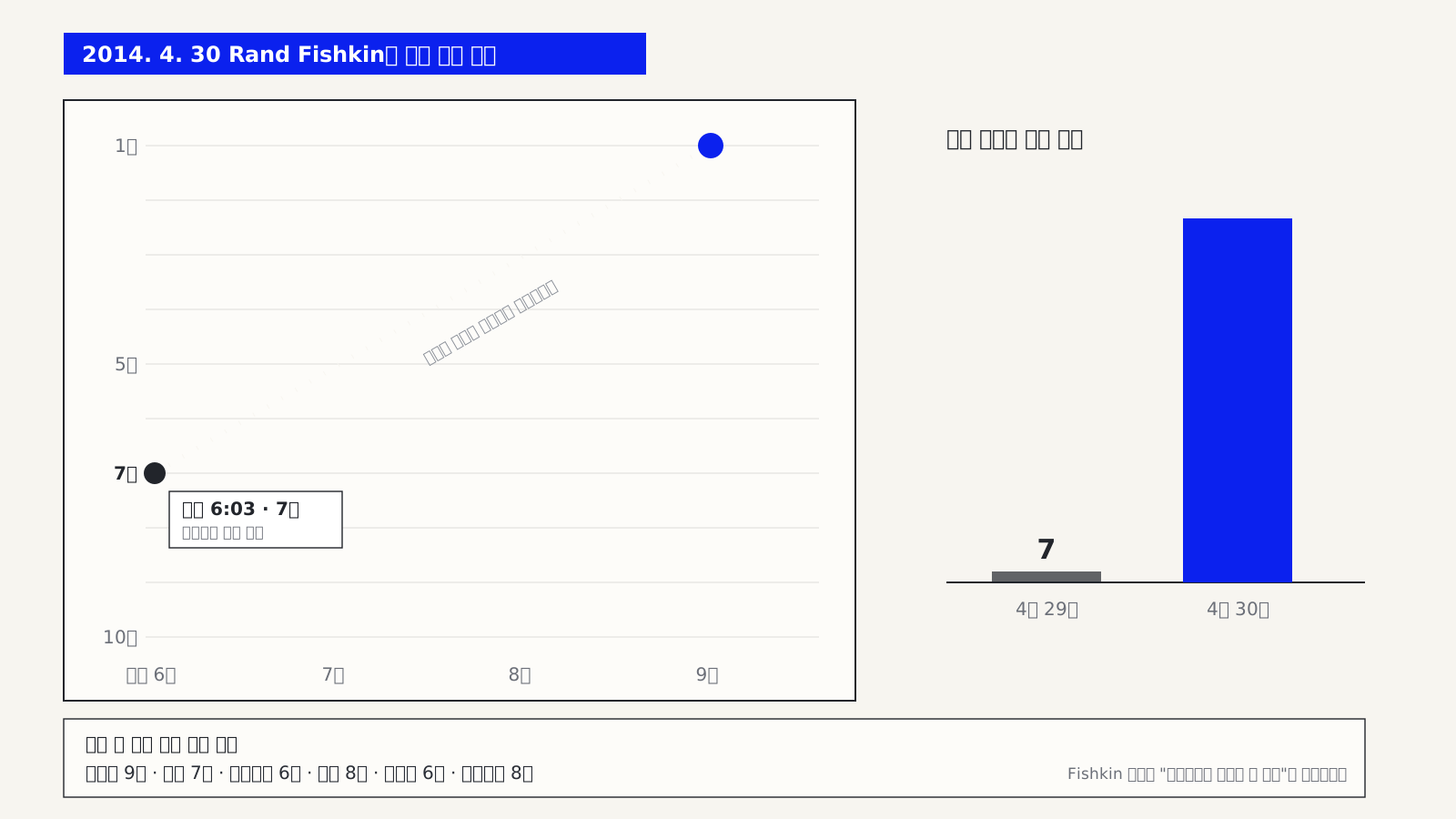
If clicks are used in ranking, could you raise rankings by gathering clicks? Someone has tested this directly. At 6:03 p.m. (U.S. Pacific Time) on April 30, 2014, Moz co-founder Rand Fishkin checked that a blog post he had written a week earlier was ranking 7th in Google’s U.S. results for a query. Then he posted on Twitter. For a few hours, people responded. He estimated that 175–250 people took part, and that day the post got 228 visits from Google search, compared with 7 the day before. At 9:01 p.m., the post was ranking 1st.
Fishkin himself wrote that this alone couldn’t prove Google ranks by searches and clicks. Other factors such as new links might have played a role, and the effect might be very temporary. In results for other countries, such as Canada, the UK, and Australia, it still ranked 6th to 9th. He guessed this was because most of the searches and clicks came from the U.S. Nine years later in court, Nayak admitted that Navboost stores click records separately by location.
Another memo released by the DOJ, a record of a January 2025 call with Nayak, contains this point in a passage explaining the adoption of machine learning models: Google avoids building rankings that simply predict which results will be clicked, because clicks are easy to manipulate and are also an unreliable measure of whether the user experience improved. The same memo also describes Navboost as a table of click counts per query and document.
Separately from the trial, in May 2024, a leak of Google Search’s internal API documentation made headlines. The documents were posted on GitHub in March 2024 and taken down in May. According to an analysis published by Rand Fishkin of SparkToro, the documents linked items such as good clicks, bad clicks, and last longest clicks to Navboost. He also relayed a source’s claim that Google counters manipulated clicks using cookie history, logged-in Chrome data, and pattern detection, and wrote that this directly contradicted public statements made by Googlers. Mike King of iPullRank counted 84 mentions of Navboost in the leaked documents and highlighted a mechanism called squashing, which keeps any one signal from overwhelming others. He was careful to note, however, that there was no way to know how much weight each item carries in ranking calculations. Google warned against making inaccurate assumptions about Search based on out-of-context, outdated, or incomplete information.
Put the statements from the trial record side by side and the same picture emerges. Lehman said people tend to click low-quality content, so being pulled too far by clicks drops result quality below the goal. Nayak said raising quality a little may make live user experiments look worse, but it is good in the long run. The opinion noted that Google’s click data even includes whether users return to the search results, and how quickly.
Google doesn’t just count clicks. It also looks at how quickly the person who clicked came back and at the quality of the page. Even if you inflate click counts, if people who were lured in turn right back, it’s hard to expect those clicks to help. As the 2016 speaker notes put it, Google looks at people more than at documents.
Lessons for SEO practitioners: content that doesn’t send people back to search
If we had to boil down what the trial record revealed into one sentence, it would be this: Google looks at what people click in search results, how quickly they come back after clicking, and whether the site is trustworthy, all together. Google’s published content guidance asks a question in the same spirit: after reading your content, will someone feel they need to search again to get better information? We’ve organized eight ways to apply this question to your site’s content.
1. Write in the words people search with
As Nayak testified, the first gate for narrowing down candidates is the words on the page. If you use only industry jargon or internal names, you may miss the words your customers actually search for. Put the expressions customers really use into your titles and body text, and first make sure the page properly goes through crawling and indexing. A page that never makes the candidate list has no chance to build up click signals.
2. Keep the title’s promise above the fold
The first thing someone who clicks a search result checks is whether the answer the title promised is here. If the introduction is long or the answer is far down the page, people go straight back and click another result. According to the opinion, how quickly they come back is also captured in Google’s click data. Put the core answer above the fold and the detailed explanation below it.
The same principle applies to title tags and meta descriptions. Google’s guidance asks you to check whether your title accurately summarizes the content and avoids exaggeration or shock value. A title designed to squeeze out clicks only invites visits that bounce straight back.
3. Answer in the format that fits why people searched
Even on the same topic, people looking for a definition, people looking for how-to steps, and people comparing companies want different formats. Give a long personal story to someone looking for a definition, or theory to someone looking for steps, and they’ll search again. Before writing, look at what format the current top results for that query use, and think about a structure that gets to the answer even faster, in line with search intent.
4. Answer the next question on the same page
Anticipate the questions readers will have next and answer them in the body, or add internal links that lead straight to related posts. This reduces the reasons to go back and look for answers on another site. That doesn’t mean making content longer. Google has said clearly that it has no preferred word count. The standard is whether all the needed answers are there.
5. Build trust across the whole site
Q* was a score assigned mostly by site rather than by query, and it doesn’t change much. That means raising the average of your entire site matters as much as making any single page great. The self-assessment questions in Google’s guidance also ask whether it’s clear who wrote the content, whether it shows expertise drawn from first-hand experience, and whether it offers information or analysis not found elsewhere. Disclosing authors and sources and including what you learned by doing it yourself is how you turn E-E-A-T into content.
If you have many old, thin pages, rewriting or merging them may help the whole site more than piling on new posts. Content whose main purpose is attracting people from search is also the first warning sign Google’s guidance tells you to watch for.
6. Check it on a phone screen first
Navboost stores click records separately for mobile and desktop. If the text is small on a phone or the first screen is covered by ads and pop-ups, records of people bouncing straight back may pile up in the mobile column. Google’s guidance also recommends checking whether your pages provide a good overall page experience in many respects. Core Web Vitals, which measure loading speed and layout shift, are a good starting point.
Here I’ll add a personal opinion. It isn’t something from the trial record or Google’s documents, but I believe that if content has a generic design that looks churned out by AI, people leave before they even read it. Layouts and decorations you’ve seen everywhere erase the signal that this site was made with real care. The impression of the first screen is also a factor in whether people bounce straight back.
7. Update changing information on time
The existence of a separate mechanism like Instant Glue, which tracks reactions from the last 24 hours, suggests that for queries where fresh news matters, recent reactions are reflected quickly. For posts covering information that changes, such as prices, regulations, and product specs, update the changes on time and note when you updated them. That reduces visits that bounce straight back after seeing outdated information.
8. Don’t buy clicks; improve with data
We don’t recommend click manipulation services that promise to raise your rankings. Google knows clicks are easy to manipulate, and click records are stored separately by location and device. Even if rankings move briefly, as in the 2014 experiment, there’s no guarantee the effect will last.
Instead, use the real data in Google Search Console to find what to fix. For pages with many impressions but few clicks, check whether the title and description match searchers’ expectations. For pages that get clicks but where visitors leave quickly, check with your analytics tools and reread the body to see whether it keeps the title’s promise. In the end, what Google looks at is whether the searcher found the answer here.
The scene illustrations in this post are re-creations based on the record, and the people shown do not look like the real individuals.
References
- U.S. v. Google antitrust opinion, full text (2024-08-05, Judge Amit Mehta) – CourtListener
- U.S. v. Google remedies opinion (2025-09-02) – CourtListener
- Order denying Google’s motion for a partial stay (2026-05-07) – CourtListener
- Trial transcript of Pandu Nayak’s testimony (2023-10-18, morning) – The Capitol Forum
- Trial transcript of Pandu Nayak’s testimony (2023-10-18, afternoon) – The Capitol Forum
- Trial transcript of Eric Lehman’s testimony (2023-09-20) – CourtListener
- Google Search Q4 2016 all-hands presentation, UPX0203 – U.S. Department of Justice
- Ranking for Researchers presentation, UPX0204 – U.S. Department of Justice
- Life of a Click presentation, UPX0004 – U.S. Department of Justice
- Memo of call with Google engineer HJ Kim, PXR0356 – U.S. Department of Justice
- Memo of call with Pandu Nayak, PXR0357 – U.S. Department of Justice
- How results are automatically generated – How Google Search Works
- Creating helpful, reliable, people-first content – Google Search Central
- Google’s ABC ranking signals and T* topicality explained – Search Engine Land
- Analysis of leaked Google Search API documents – SparkToro
- Analysis of the leaked Google search algorithm documents – iPullRank
- Google confirms the leaked Search documents are real (2024-05-29) – The Verge
- Matt Cutts on bounce rate (2008) – Search Engine Roundtable
- Is CTR a ranking factor? Including Gary Illyes at Pubcon 2016 – Search Engine Journal
- Gary Illyes on dwell time and CTR in a Reddit AMA (2019) – Search Engine Roundtable
- John Mueller on CTR and clickbait titles (2021) – Search Engine Roundtable
- Danny Sullivan on user interaction signals (2023) – Search Engine Roundtable
- DOJ urges appeals court to strengthen remedies (2026) – Courthouse News
- Plaintiffs’ remedies findings of fact (citing Professor Douglas Oard’s Instant Glue testimony) – U.S. Department of Justice
- Experiment suggesting searches and clicks can directly influence Google rankings (2014) – SparkToro
Aug.2026By Studio JT